





1. Avenue of the Baobabs
The Avenue of the Baobabs is one of Madagascar’s most iconic natural landmarks and a powerful symbol of the island’s unique biodiversity. Located near Morondava, this dirt road is lined with towering baobab trees that can reach heights of over 30 meters and are hundreds of years old. At sunrise and sunset, the silhouettes of these massive trees against the sky create one of the most photographed scenes in Africa, offering a striking introduction to Madagascar’s natural wonders.
2. Tsingy de Bemaraha National Park
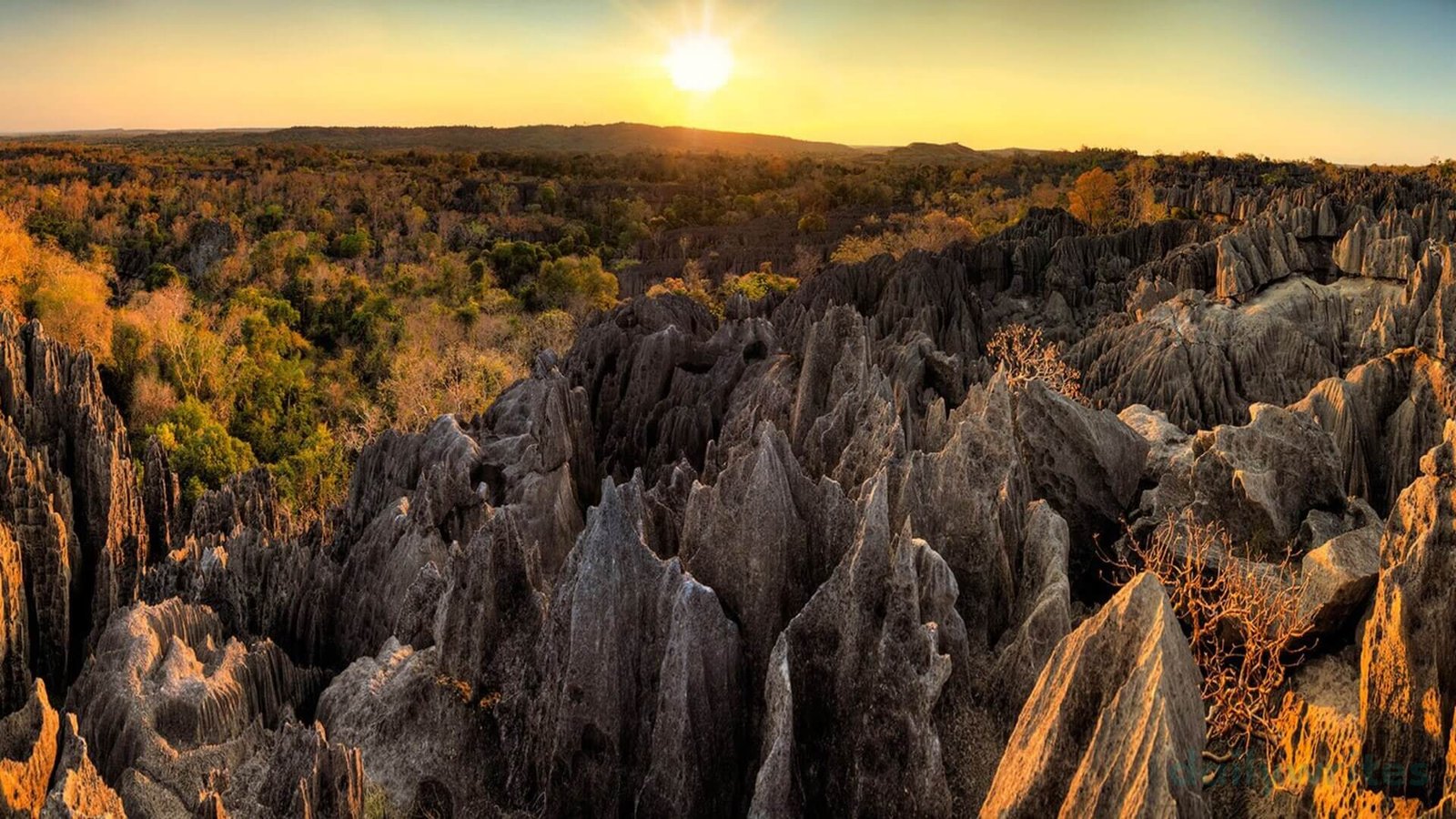
Tsingy de Bemaraha National Park is a dramatic limestone landscape unlike anything else on Earth. The park is famous for its razor-sharp stone pinnacles, deep canyons, caves, and suspension bridges. Formed over millions of years through erosion, the “stone forest” is both visually stunning and ecologically rich, home to rare plants, birds, and lemurs. Exploring the tsingy is an unforgettable experience that highlights Madagascar’s geological diversity.
3. Nosy Be
Nosy Be is Madagascar’s most popular island destination, known for its clear waters, coral reefs, and relaxed atmosphere. Located off the northwest coast, it offers white-sand beaches, vibrant marine life, and opportunities for snorkeling and diving. Beyond its beaches, Nosy Be also features lush hills, ylang-ylang plantations, and local markets, making it a perfect blend of natural beauty and cultural charm.
4. Isalo National Park
Isalo National Park is a vast landscape of sandstone formations, deep gorges, natural swimming pools, and open grasslands. Often compared to a desert canyon environment, the park is known for its dramatic scenery and hiking opportunities. Hidden oases fed by clear streams provide refreshing swimming spots, while endemic plants and lemur species add to the park’s ecological significance.
5. Andasibe-Mantadia National Park
Andasibe-Mantadia National Park is one of the best places in Madagascar to observe wildlife, especially lemurs. Located east of the capital, this rainforest reserve is home to the indri, the largest living lemur, famous for its haunting calls that echo through the forest. The park’s lush vegetation, rich birdlife, and accessible trails make it a must-visit for nature lovers and first-time visitors.
6. Ranomafana National Park
Ranomafana National Park is a biodiversity hotspot set within Madagascar’s eastern rainforests. Known for its hot springs and dense jungle, the park shelters numerous lemur species, reptiles, amphibians, and rare plants. The combination of misty forest trails and abundant wildlife makes Ranomafana one of the most rewarding destinations for eco-tourism and wildlife observation.
7. Île Sainte-Marie (Nosy Boraha)
Île Sainte-Marie, also known as Nosy Boraha, is a tranquil island off Madagascar’s east coast with a rich blend of natural beauty and history. The island is famous for whale watching, especially between July and September when humpback whales migrate close to shore. Palm-lined beaches, coral reefs, and remnants of pirate history give Sainte-Marie a unique and peaceful character.
8. Ankarana Special Reserve
Ankarana Special Reserve is another remarkable limestone region, featuring caves, underground rivers, and sharp rock formations. This reserve is less visited than Tsingy de Bemaraha but equally impressive, offering a more secluded experience. It is home to bats, reptiles, and several lemur species, as well as unique ecosystems hidden within its caves and forests.
9. Masala National Park
Masala National Park protects one of the last remaining lowland rainforests in Madagascar. Located in the northeast, the park combines dense jungle with untouched beaches and coral reefs. Its remote location helps preserve its rich biodiversity, including rare birds, frogs, and lemurs. Masala offers a true wilderness experience for travelers seeking pristine nature.
10. Antananarivo and the Royal Hill of Ambohimanga
Antananarivo, Madagascar’s capital, provides insight into the island’s cultural and historical heritage. Nearby, the Royal Hill of Ambohimanga is a UNESCO World Heritage Site and a sacred place in Malagasy history. This fortified royal settlement offers panoramic views, traditional architecture, and a deeper understanding of Madagascar’s monarchy and cultural identity.
Conclusion
Madagascar is a destination of extraordinary diversity, where ancient landscapes, rare wildlife, and deep-rooted culture come together. From towering baobabs and stone forests to rainforests, islands, and historic sites, these must-see attractions reveal why Madagascar is often described as nature’s wonderland. Visiting these places not only offers unforgettable experiences but also highlights the importance of conserving one of the most unique environments on Earth.

Other Articles

8 Reasons Why Red Rover Is a Must-Play Game
Baxter Neal Helson Bio: Age, Height, Career, and Facts