




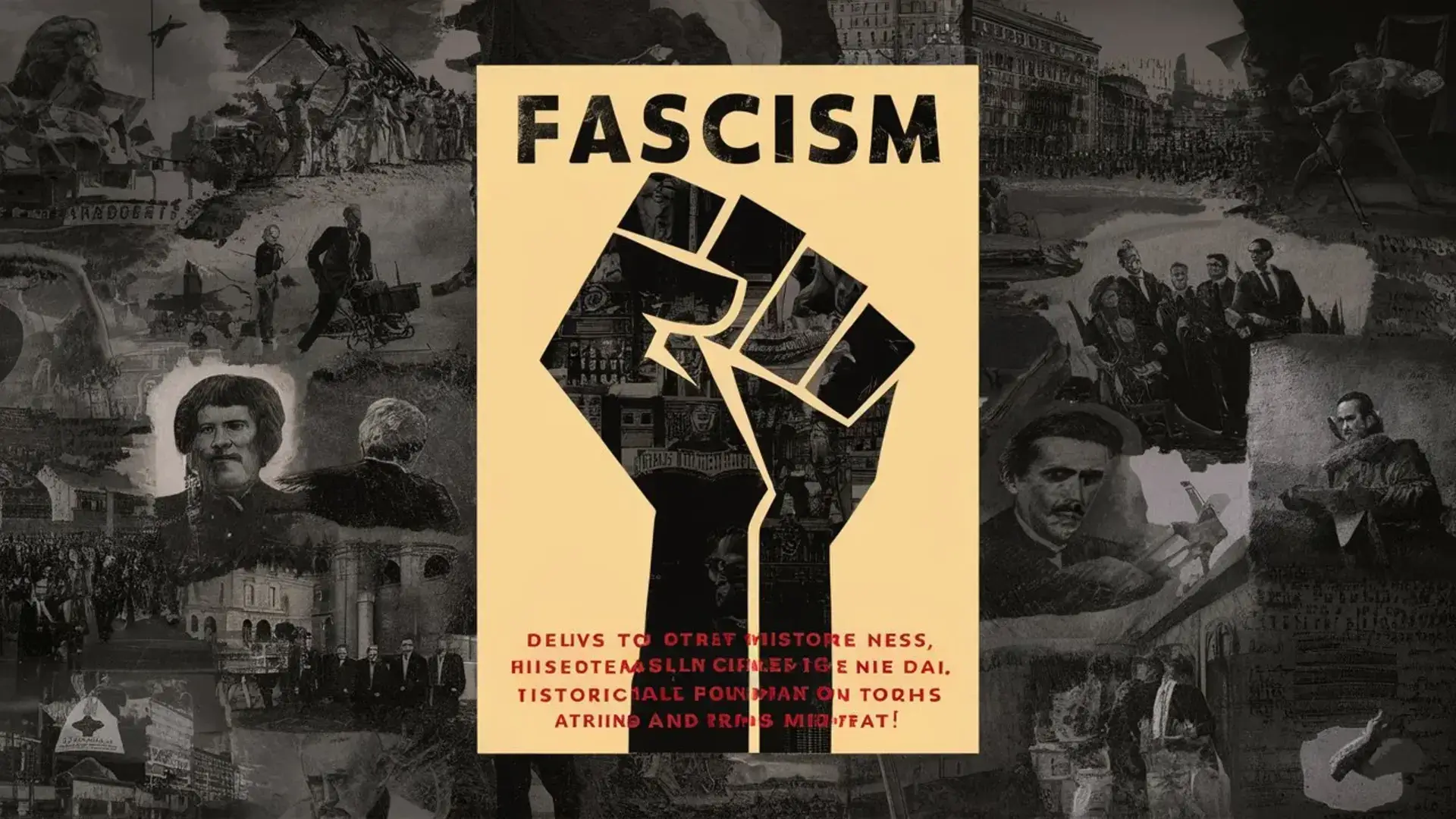

The term “Fascisterne” is the Danish plural form of “fascist” and refers to individuals who adhere to or support fascism, a political ideology that emerged in early twentieth-century Europe. Fascism is widely studied in political science and modern history because of its profound and often devastating impact on global events, particularly during the interwar period and World War II. Understanding the meaning, historical development, and ideological foundations of fascism is essential for grasping how the movement shaped political systems and influenced modern extremist ideologies.
The Meaning and Origins of Fascisterne
The word “fascism” originates from the Italian term “fascio,” meaning bundle, which itself derives from the Latin “fasces.” In ancient Rome, fasces symbolized authority and power, consisting of a bundle of rods bound together around an axe. In the twentieth century, this symbol was adopted by political movements seeking to emphasize unity, strength, and centralized authority. The ideology formally took shape under the leadership of Benito Mussolini in Italy following World War I. Supporters of Mussolini’s movement were known as fascists, and in Danish, they would be referred to as “Fascisterne.”
The term gradually expanded beyond Italy, becoming associated with broader authoritarian and nationalist movements that shared similar ideological features. While fascism originated in Italy, it influenced various political regimes and movements across Europe during the 1920s and 1930s.
Historical Development of Fascism
Fascism developed in the aftermath of World War I, a period marked by economic instability, social unrest, and political polarization. Italy faced severe economic difficulties, high unemployment, and widespread dissatisfaction with the results of the war. In this climate, Mussolini capitalized on nationalist sentiment and fear of socialist revolution to consolidate power. By 1922, he had established a fascist regime in Italy that prioritized state control, suppression of opposition, and strong centralized leadership.
Fascist ideas also gained traction in other parts of Europe during the interwar years. In Germany, Adolf Hitler led the National Socialist movement, commonly known as Nazism, which shared several ideological similarities with Italian fascism, including authoritarian governance and extreme nationalism. Although Nazism developed distinct racial doctrines, both movements rejected liberal democracy and sought to create totalitarian states.
The expansionist ambitions of fascist regimes played a significant role in triggering World War II. The war ultimately led to the defeat of major fascist governments, particularly in Italy and Germany, but the ideology’s historical impact remains deeply significant.
Core Ideological Principles
Fascism is generally characterized by extreme nationalism, authoritarian leadership, and the belief in a unified state that overrides individual interests. Fascisterne typically advocate for a strong central authority led by a single dominant leader who embodies the will of the nation. The ideology rejects liberal democratic principles such as political pluralism, individual rights, and free elections.
Another defining element is the emphasis on national rebirth, often framed as a response to perceived national decline. Fascist movements frequently portray themselves as restoring past glory and cultural purity. This rhetoric is combined with militarism, strict social hierarchy, and the suppression of political dissent.
In economic terms, fascist systems historically promoted state-directed capitalism rather than full state ownership, allowing private property while maintaining strict government oversight. This approach aimed to align economic activity with national objectives rather than individual profit motives alone.
Differences Between Fascism and Other Political Systems
Fascism differs significantly from liberal democracy, which emphasizes individual freedoms, separation of powers, and political competition. It also differs from traditional monarchies because it relies on mass mobilization and ideological propaganda rather than hereditary rule.
While sometimes compared to communism due to its authoritarian characteristics, fascism is distinct in its rejection of class struggle as the central organizing principle. Instead, fascist ideology focuses on national unity and hierarchical order rather than international worker solidarity.
Understanding these distinctions is essential when analyzing political movements historically labeled as fascist or when evaluating modern extremist rhetoric.
Modern Interpretations and Usage of the Term
In contemporary discourse, the term “fascist” is often used loosely as a political insult, which can dilute its historical meaning. Scholars emphasize the importance of using the term accurately to describe specific ideological traits rather than applying it broadly to any authoritarian behavior.
Modern extremist groups sometimes draw selectively from fascist symbolism or rhetoric, but historical fascism refers specifically to the organized movements and regimes of early twentieth-century Europe. Accurate usage requires understanding the ideology’s historical roots and clearly defined characteristics.
Conclusion
Fascisterne refers to individuals who adhere to fascist ideology, a political doctrine rooted in extreme nationalism, authoritarian leadership, and the rejection of democratic principles. Emerging in post–World War I Italy under Benito Mussolini, fascism shaped major historical events, including the rise of totalitarian regimes and the outbreak of World War II. Its ideological emphasis on unity, hierarchy, and state power left a lasting mark on global history. Studying the meaning, development, and principles of fascism remains essential for understanding both the past and the ways in which political ideologies continue to influence societies today.

Other Articles

Bardid and the Future of Digital Innovation
10 Essential Tips to Use Pantagonar Effectively