




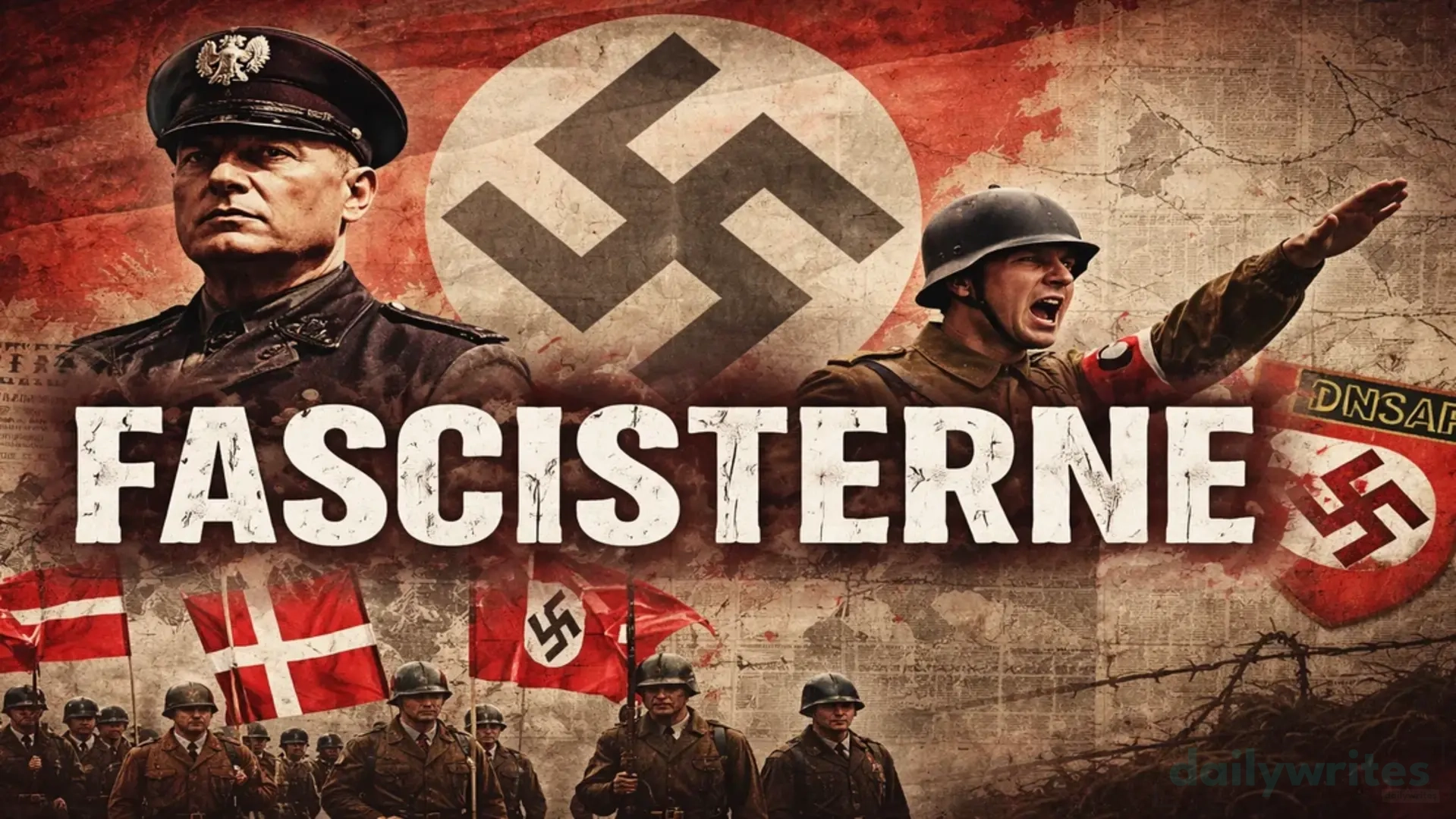

The term “Fascisterne,” which translates from Danish as “the Fascists,” refers to members and supporters of fascist movements that emerged in Europe during the early twentieth century. Fascism was a radical, authoritarian political ideology that reshaped several nations between the World Wars and left a lasting impact on global politics. Understanding the origins, influence, and legacy of fascism requires examining its historical context, leadership, ideological foundations, and long-term consequences.
The Historical Origins of Fascism
Fascism developed in the aftermath of World War I, a period marked by economic instability, political unrest, and widespread social anxiety. In Italy, dissatisfaction with postwar settlements and fears of socialist revolution created conditions for the rise of nationalist movements. The ideology took formal shape under the leadership of Benito Mussolini, who founded the National Fascist Party in 1921. Mussolini’s movement promoted extreme nationalism, centralized authority, and the rejection of liberal democracy.
In 1922, the March on Rome enabled Mussolini to consolidate power and establish a dictatorship. Fascism in Italy emphasized loyalty to the state, strict social order, and the suppression of political opposition. The regime used propaganda, censorship, and paramilitary groups to eliminate dissent and strengthen control over society.
Core Ideological Principles
Fascist ideology centered on authoritarian leadership, national unity, militarism, and the belief that individual interests must be subordinate to the state. It rejected democratic institutions, free press, and multiparty systems, viewing them as sources of weakness and division. Instead, fascism promoted a single-party state led by a strong leader who embodied national identity.
Although Italian fascism initially focused more on nationalism than race, fascist ideology in Germany evolved into a more explicitly racial doctrine under Adolf Hitler. The Nazi regime adopted elements of fascism while adding aggressive expansionism and systematic racial persecution. This adaptation intensified the destructive consequences associated with fascist governance.
Expansion and Influence Across Europe
Fascist movements did not remain confined to Italy. Variations of fascism appeared across Europe in the interwar years, including in Germany, Spain, and other nations experiencing political instability. In Germany, the Nazi Party rose to power in 1933, transforming the state into a totalitarian regime that controlled nearly every aspect of life. The fascist model of centralized authority, propaganda machinery, and state-driven nationalism influenced extremist political groups beyond Europe as well.
The aggressive expansionist policies of fascist regimes played a direct role in the outbreak of World War II. Military invasions, territorial ambitions, and alliances among authoritarian states destabilized international relations and contributed to one of the most devastating conflicts in human history.
Social and Cultural Impact
Fascist governments invested heavily in propaganda to shape public opinion and national identity. Education systems, media outlets, and cultural institutions were restructured to promote loyalty and suppress criticism. Artistic expression was often censored or repurposed to serve state narratives.
Economic policies under fascism aimed at state control and national self-sufficiency, though outcomes varied significantly. While some infrastructure projects created short-term employment, long-term economic sustainability was often undermined by militarization and international isolation.
The human cost of fascist rule was severe. Political opponents were imprisoned or executed, civil liberties were dismantled, and minority communities faced systematic persecution. The Holocaust, carried out by Nazi Germany, remains one of the most tragic consequences of fascist extremism.
The Fall of Fascist Regimes
By the end of World War II in 1945, fascist regimes in Italy and Germany had collapsed. Mussolini was overthrown and executed in 1945, and Hitler’s regime ended with Germany’s defeat the same year. The devastation of the war, combined with revelations of atrocities, discredited fascism as a governing ideology on the global stage.
Postwar Europe saw the strengthening of democratic institutions and the establishment of international bodies such as the United Nations, aimed at preventing the resurgence of aggressive authoritarian regimes.
Modern Interpretations and Legacy
Although classical fascist states no longer exist, the ideology continues to be studied and debated by historians and political scholars. Contemporary extremist movements sometimes draw on elements associated with fascism, such as ultranationalism and authoritarian rhetoric, though the historical context differs significantly from the interwar period.
The legacy of fascism serves as a cautionary example of how economic distress, political instability, and social division can create fertile ground for authoritarian movements. Its history underscores the importance of democratic safeguards, rule of law, and protection of civil rights.
Conclusion
Fascisterne, or the fascists, emerged from a turbulent historical moment and reshaped global politics through authoritarian rule, aggressive nationalism, and suppression of dissent. Originating in Italy under Mussolini and expanding most destructively in Nazi Germany, fascism left a profound and tragic legacy that continues to influence political discourse today. Examining its origins, influence, and consequences remains essential for understanding twentieth-century history and for recognizing the warning signs of authoritarian extremism in the modern world.

Other Articles

Explore the Top Features of com.هنتاوي
7 Common Roblox Login Issues and How to Fix Them